
Hiring a Nanny in Canada: employer checklist for dual-income families
A concise checklist covering contracts, TD1s, provincial ESAs, and payroll records—built for busy parents who need domestic help without HR departments.
Nick at Roostpay
Why this checklist exists
Canadian parents hiring nannies, au pairs, or care assistants become employers overnight. Between managing interviews, checking references, and negotiating hourly rates, the actual “business” of being an employer often gets pushed to the back burner.
But ignoring the legal requirements of household employment is a massive risk. The CRA and provincial labour boards do not differentiate between a massive corporation and a busy parent hiring a nanny for the first time.
The questions below surface what dedicated household payroll software like RoostPay automates—contracts, TD1 capture, statutory calculations, and audit-friendly records. If you are going the DIY route, here is your definitive checklist to ensure you stay compliant from day one.
Before day one: The Legal Setup
The foundation of a stress-free employer-employee relationship is established before your nanny ever walks through the door.
- Determine Employment Status: Confirm whether you are hiring a domestic employee versus an independent contractor. While many families hope their nanny is a contractor to avoid taxes, the CRA is very clear: if you set their schedule, provide the equipment (like a stroller or car), and direct their daily tasks, they are an employee. You must treat them as one.
- Draft a Formal Employment Contract: A verbal agreement is not enough. You need an employment agreement that explicitly outlines:
- Hours of work: What are the expected start and end times?
- Wages: State the gross hourly wage, not the net take-home pay. (The CRA calculates everything based on gross).
- Overtime: Acknowledge how overtime will be paid based on your province’s specific Employment Standards Act (ESA).
- Duties: Detail exactly what is expected (e.g., light housekeeping, meal prep, driving the kids).
- Obtain a CRA Business Number: You cannot pay a nanny legally without one. You must register for a domestic employer Business Number (which acts as a payroll program account) with the CRA. You will use this number to remit their taxes every month.
- Collect TD1 Forms: Before the first shift, have your nanny fill out both federal and provincial TD1 forms. These forms tell you exactly how much income tax to withhold from their paycheck based on their personal tax credits.
- Register with Workers’ Compensation: Depending on your province (like WorkSafeBC or WSIB in Ontario) and how many hours your nanny works, you may be legally required to register for workers’ compensation insurance to cover them in case of an on-the-job injury.
During employment: Managing the Math
Once your nanny starts, the administrative work shifts from setup to ongoing math. This is where most families fall behind.
- Track Verifiable Time Records: You must track every single shift, including start times, end times, and unpaid breaks. Paper logs or text messages create massive disputes during audits. You need a digital, verifiable record of hours worked.
- Calculate Provincial Overtime: Apply provincial ESA overtime rules meticulously. They differ wildly across Canada (e.g., BC calculates daily overtime after 8 hours, while Ontario calculates weekly overtime after 44 hours). Never assume standard US federal overtime rules apply to your Canadian household.
- Calculate Statutory Holiday Pay: If your nanny qualifies, you must calculate and pay them for provincial statutory holidays, even if they don’t work that day. The math for this calculation changes based on their average hours worked over the previous 30 days.
- Calculate Vacation Pay or Accrual: Depending on your agreement with your nanny or domestic employee, you will either have to track their vacation accrual or pay vacation out on each pay cheque. Most domestic employer families opt to pay their nanny out for their vacation on each pay cheque as it is simpler to track and means there isn’t a surprise expense when your employment relationship with your employee ends. Either way, you will need a system to calculate this legally and track payments and time off.
- Remit Payroll Taxes on Time: By the 15th of every month, you must remit the CPP, EI, and income tax you deducted from your nanny’s paychecks, plus your matching employer portions, directly to the CRA.
- Provide Compliant Pay Stubs: The law requires you to provide a detailed pay stub on every payday that breaks down gross pay, net pay, and all specific tax deductions. A simple e-transfer receipt is not a legal pay stub.
When life changes: Reporting and Adjustments
Your payroll system needs to be flexible enough to handle changes in your nanny’s life and your family’s needs.
- Update Contracts for Material Shifts: If you have another child, move to a new house, or significantly change their schedule or duties, you need to update the employment contract to reflect the new reality and wage.
- Revisit TD1s Annually: If your nanny or domestic employee has changes that affect their tax credits, they will need to update and submit a new TD1 for you use during payroll.
- Generate the Year-End T4: By the end of February, you must generate a T4 slip for your nanny and file a T4 Summary with the CRA summarizing the entire year’s payroll.
- Issue a Record of Employment (ROE): If your nanny quits, is terminated, or goes on maternity leave, you have five calendar days to issue an ROE to Service Canada. This document is mandatory for them to claim Employment Insurance.
Ditch the DIY Stress
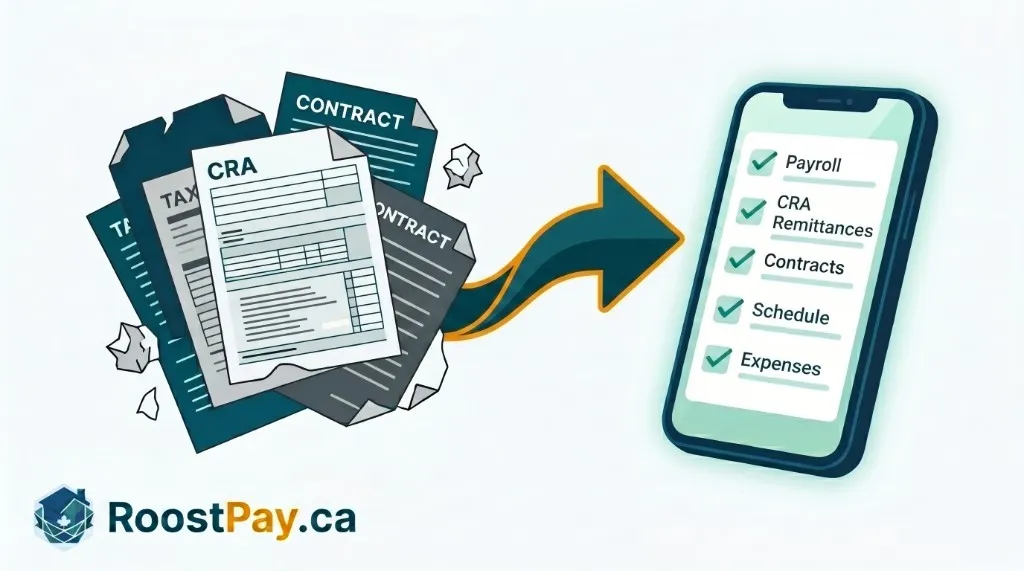
Managing this checklist manually on a spreadsheet is a part-time job.
RoostPay packages every single one of these steps into guided, automated workflows. From generating employment contracts to automatically calculating provincial overtime and remitting CRA taxes, we handle the compliance so you can answer caregiver questions with confidence—and sleep better knowing the paperwork matches reality. See how the RoostPay App and Payroll Service can help you claim your weekends back.